Booking a Phu Quoc package tour is the safe choice — a van picks you up at the door, meals are pre-set, and every check-in stop is arranged for you. But you'll also miss Ong Lang Beach at sunset with barely a soul around, miss the 35,000-VND bowl of snakehead-fish noodle soup at dawn right by the pier, and miss the feeling of deciding for yourself that today you want to linger at Sao Beach for two more hours. Independent travel in Phu Quoc in 2026 is what you choose when you want more than that.
This guide walks you through it from A to Z: getting to the island, choosing where to stay by budget, renting a vehicle, which beaches to explore, what to eat, real-world costs, and the key tips for not getting overcharged. By the end, you'll have everything you need to set off on your own — no tour to buy, no one to plan it for you.
Why Choose Independent Travel in Phu Quoc for 2026?
There are four practical answers to this question — not marketing slogans.
Save 30–40% versus an all-inclusive tour. A 4-day, 3-night Phu Quoc tour from Ho Chi Minh City currently runs 6,000,000 – 9,000,000 VND per person — flights, a 3-star hotel, and a few sightseeing stops included. Go independent and you can hit a comparable experience for 4,000,000 – 6,000,000 VND, or upgrade to a 4-star resort for the same total spend.
Set your own pace. Tours run on a rigid schedule: breakfast at 6, on the bus by 7, at stop A by 11, stop B by 1. On your own, you decide whether you want to stay for the Sao Beach sunrise until 9 or get up early to explore the fish market. Nobody rushes you.
Discover places off the standard tour route. Most Phu Quoc tours lead you to the same three or four familiar spots. Ong Lang Beach, the Ham Ninh fishing village, the Khanh Hoa pepper gardens, or the small roads winding through the national park — these are for independent travelers only.
Change plans easily. Rain in the morning? Stay at the resort a little longer and switch your outing to the afternoon. Love a place too much? Add a night and drop a stop you were less excited about. And in summer 2026 in particular, Phu Quoc has finished upgrading its island-wide transport network — the paved roads into the western and southern zones are fully surfaced now, making DIY travel easier than ever.
How to Get to Phu Quoc on Your Own in 2026
By air
This is what the vast majority choose. From Ho Chi Minh City a direct flight to Phu Quoc is just 55 minutes; from Hanoi it's about 2 hours; from Da Nang 1.5 hours. Round-trip fares booked early (4–6 weeks ahead) run 800,000 to 2,500,000 VND per person — Vietjet and Bamboo usually beat Vietnam Airlines on price for this short hop.
Booking tip: compare all three carriers for the same date, paying special attention to checked-baggage policies (they vary a lot between airlines). If you're going in the June–August summer peak, book at least 5–6 weeks ahead — cheap fares vanish faster than you'd expect.
By sea
From Rach Gia (high-speed ferry, ~3 hours) or from Ha Tien (~1.5 hours) — this option is cheaper than flying, but it adds a leg of ground transport from Ho Chi Minh City to the ferry terminal. It suits you if you want to combine some Mekong Delta sightseeing on the way out to the island. Ferry tickets are around 250,000 – 350,000 VND each way.
Choosing Where to Stay in Phu Quoc on Your Own
Phu Quoc has something at every price point — the trick is picking the right area for the purpose of your trip.
Budget (300,000 – 700,000 VND/night): The Duong Dong area is your best bet — central on the island, close to the night market, Truong Beach, and easy to reach everywhere from. Plenty of guesthouses and private homestays in this range, clean and with the basic comforts covered.
Mid-range (700,000 – 2,000,000 VND/night): Small beachfront resorts around Truong Beach or Khem Beach — with a pool, breakfast, and just a 3–5 minute walk to the sand. This is the best value for the quality you get.
High-end (2,000,000+ VND/night): The Ong Lang and Ong Doi Cape areas on the west of the island — quieter, less crowded, for those who genuinely want to unwind rather than explore.
2026 tip: The Khem Beach area in the south of the island is developing fast. Service quality and facilities have caught up with the north, but prices haven't been pushed up to match yet — this is the current "sweet spot" if you want a beautiful beach without paying premium rates.
Renting a Vehicle and Getting Around the Island
This is the single most important decision affecting your whole trip.
Motorbike (120,000 – 160,000 VND/day): The most common and most flexible option. You need an A1 license or higher — ask carefully before renting so you don't risk an unnecessary fine. Riding on the island is fairly easy since there's little traffic and the roads are now better paved.
Self-drive car (600,000 – 1,200,000 VND/day): Good for groups of 4 or more, or if you're traveling in the rainy season — a car is far safer on wet roads. Split per person, it isn't much more than a motorbike.
Electric buggies and e-bikes: Only suitable for getting around within a resort or along a short stretch of beach. Never use them for longer trips — running out of charge in the middle of the road on the island is miserable, especially somewhere remote.
Grab and taxis: Handy for one-off legs or when it rains, but expensive over longer distances. Mix and match: rent a motorbike for your active exploring days, and call a Grab for an evening trip to the night market when you don't want to worry about parking.
Tip: Ask your hotel or guesthouse to rent you a motorbike directly — it's usually 20–30% cheaper than renting from an outside shop, with less paperwork. Many places just need you to leave an ID card or passport.
Exploring Phu Quoc's Beaches on Your Own
Phu Quoc has more than two dozen beaches — knowing which one to pick for which purpose will save you a lot of time.
Truong Beach (also called Long Beach): Nearly 20 km long, this is the island's main beach. Lots of services: kayaking, surfing, beachfront restaurants. Busier, but also the most convenient if you want beach time plus plenty to do.
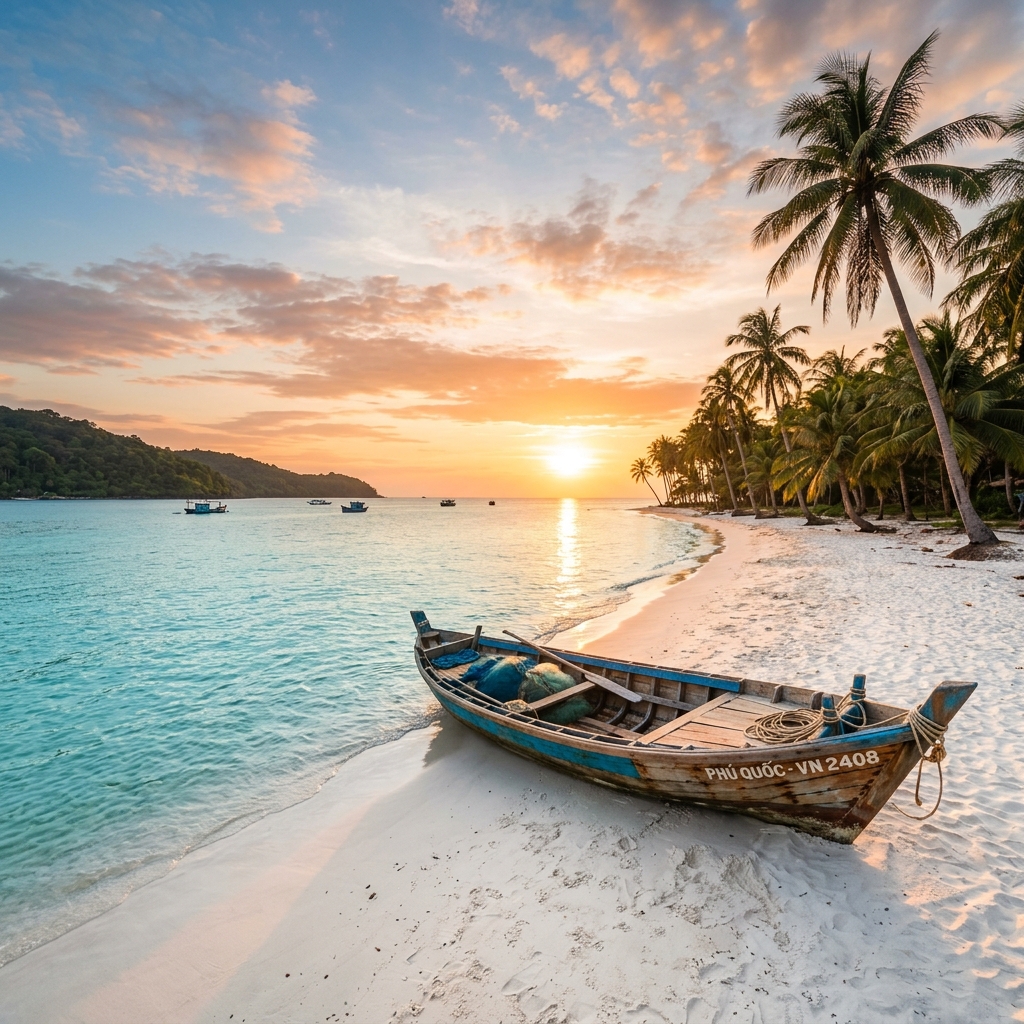
Sao Beach: Fine white sand, crystal-clear water — the best for photos. Arrive before 9 a.m. for an empty beach, beautiful light, and no harsh sun. After 10 the crowds build and the water gets churned up and murkier.
Khem Beach: Clear, quiet water, but it sits inside a high-end resort area — hard to access for outside visitors. If you're staying here, that's a big advantage.
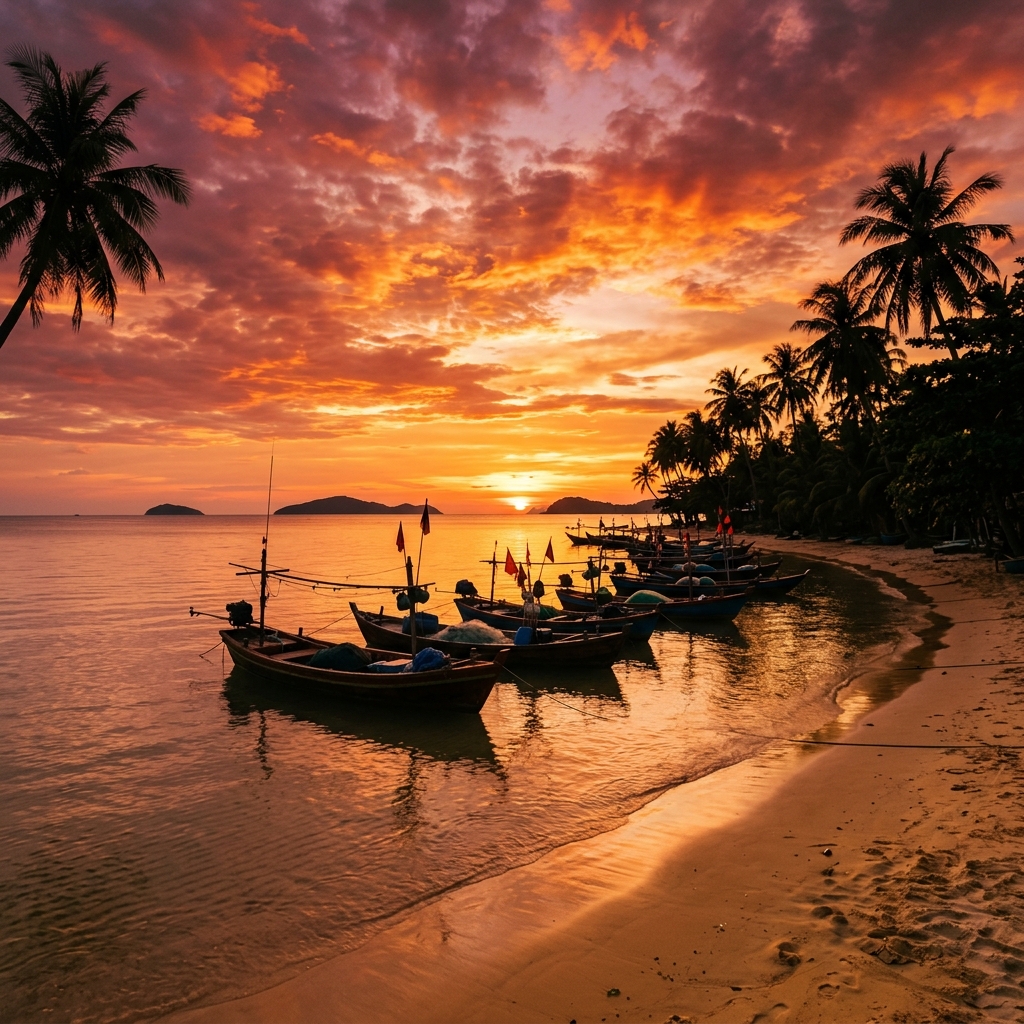
Ong Lang Beach: On the west of the island, fewer tourists, famous for its sunsets. The water on the west isn't as clear as on the east, but it makes up for it with a stunning evening view — worth at least one late-afternoon visit.
Hon Thom and Hon Rom islands: Reached by cable car or boat (~200,000 – 350,000 VND per person depending on the departure point). The clearest water in the entire Phu Quoc island chain, with the coral still intact. This is a must if you love diving or snorkeling.
Eating in Phu Quoc on Your Own
Phu Quoc is a seafood paradise — but it's also the easiest place to get overcharged if you don't know where to eat.
Eat local, eat cheap
Phu Quoc Night Market (Duong Dong): Grilled octopus, steamed crab, mantis shrimp, sea snails stir-fried with coconut — crowded, but reasonably priced if you know how to order. A budget of 200,000 – 400,000 VND per person will fill you up on seafood. Order dish by dish instead of choosing a ready-made "tourist combo" on the board — it's usually noticeably cheaper.
Food stalls around Bai Vong Ferry Terminal: Fresh cage-farmed fish straight from the pens, at far more realistic prices than the tourist zone. Less famous, but the seafood quality is no worse.
Try Phu Quoc's specialties — not to be missed
Snakehead-fish noodle soup (banh canh ca loc): An early-morning breakfast, 30,000 – 50,000 VND a bowl. Rich broth, fresh snakehead fish — completely different from the mainland version. Look for the small stalls before 8 a.m.; the earlier, the fresher.
Herring salad (goi ca trich): A specialty found nowhere else — raw herring tossed with herbs, eaten wrapped in rice paper. Strange at first bite, but you'll be hooked from the first one.
Phu Quoc fish sauce: Buy some as a gift — choose the glass-bottled kind from reputable brands like Khai Hoan or Mam Giang. At 80,000 – 150,000 VND for a 500 ml bottle, it's absolutely worth it.
Traps to avoid
Seafood stalls don't post prices — always ask the price of each dish before ordering, even if the staff seem busy. The "tourist set menus" at the night market are usually 50–70% more expensive than ordering dish by dish. And avoid eating at stalls with no local customers — the golden rule at every tourist spot.
Real Costs of Independent Travel in Phu Quoc for 2026
Here's a realistic cost table for a 4-day, 3-night trip, calculated for one person departing from Ho Chi Minh City:
| Item | Budget | Mid-range | Comfortable |
|---|---|---|---|
| Round-trip flight | 800,000 – 1,200,000 VND | 1,500,000 – 2,000,000 VND | 2,000,000 – 3,000,000 VND |
| Hotel (3 nights) | 900,000 – 2,100,000 VND | 2,100,000 – 6,000,000 VND | 6,000,000 – 15,000,000 VND |
| Food (4 days) | 800,000 – 1,200,000 VND | 1,500,000 – 2,500,000 VND | 3,000,000 – 5,000,000 VND |
| Transport and entry tickets | 400,000 – 700,000 VND | 700,000 – 1,200,000 VND | 1,500,000 – 3,000,000 VND |
| Estimated total/person | ~3,000,000 – 5,000,000 VND | ~6,000,000 – 12,000,000 VND | ~13,000,000 – 26,000,000 VND |
Note: The table above doesn't include extras (shopping, massage, add-on services). Set aside another 10–15% of your total budget for the unplanned stuff.
Independent Travel in Phu Quoc: 6 Key Tips
1. Book at least 3 weeks ahead if you go in summer. June through August is peak season — nice rooms and cheap fares disappear very fast. Book within 2 weeks of departure and you may have to accept prices 40–60% higher.
2. Think carefully if you're going in July–August and worried about rain. This is the peak of Phu Quoc's rainy season — showers can hit unexpectedly and last all day. If you go anyway, prioritize Hon Thom and the southern part of the island over the northern beaches, which are more rain-affected.
3. Always download an offline map before leaving Ho Chi Minh City. Maps.me or Google Maps offline mode — 4G in the national park and along the west coast is unreliable. Getting lost on the island with no offline map is an all-too-easy situation to end up in.
4. Don't rent an electric buggy if you plan to go far. E-buggy batteries usually only last 15–25 km. Pushing an e-buggy home along an empty island road looking for a charge point is not an experience anyone wants.
5. Get cash beforehand or withdraw in the center. ATMs in remote areas often run out of cash, especially on weekends. Many local food stalls and small parking lots only take cash.
6. Groups of 4 or more should consider renting a car. Split per person, renting a car for the day is usually cheaper than the total of all your taxi fares combined — and far more comfortable, especially on rainy days.
Plan Your Phu Quoc Trip With AI — 10x Faster
The hardest part of going independent isn't booking flights or finding a place to stay — it's putting things in a sensible order.
Phu Quoc has more than 20 beaches and dozens of attractions, and if you don't plan by geographic zone, you'll drive the same stretch of road over and over, losing hours each day just to a poorly optimized itinerary. Researching and planning it yourself typically takes 3–5 hours if you've never been.
ECSATrail AI Planner shortens that process to a few minutes: you enter the number of days, your budget, and your preferences (quiet beaches or activities, local eats or proper restaurants, traveling as a couple or a family), and the AI produces a session-by-session itinerary — with distances already calculated, a sensible geographic order, and restaurant suggestions that fit your budget.
The itinerary it produces is fully editable — add stops, reorder, or ask the AI to suggest alternatives if the weather changes. This isn't a rigid tour — it's a personalized itinerary you have full control to adjust.
Independent Travel in Phu Quoc 2026: Frequently Asked Questions
When is the best time to visit Phu Quoc? The dry season from November to April — clear skies, calm seas, low chance of rain. December and January are the most ideal, but also the busiest and most expensive.
Is 3 days enough for Phu Quoc? Enough to experience the main highlights: 2–3 beautiful beaches, the night market, and a diving or island-hopping session. If you want to explore more small islands, the fishing villages, and go deeper into the national park, allow 4–5 days.
Anything special to prepare? Sunscreen SPF 50 or higher (the beach sun is much stronger than on the mainland), motion-sickness pills if you plan to take a boat to the smaller islands, and enough cash for at least the first 2 days before you find an ATM.
Is Phu Quoc safe? Very safe for travelers. Crime targeting visitors is almost nonexistent. What you need to be more careful about is rented e-buggies with no accident insurance, and the fact that some rental shops don't check licenses — protect yourself by driving carefully and not letting the battery die mid-road.
With this guide, you have everything you need to set off on your own — no tour, no one to plan it for you. As for the rest — a personalized itinerary matched to your exact budget, preferences, and number of days — ECSATrail handles that for you.
Check out the other articles in the series: