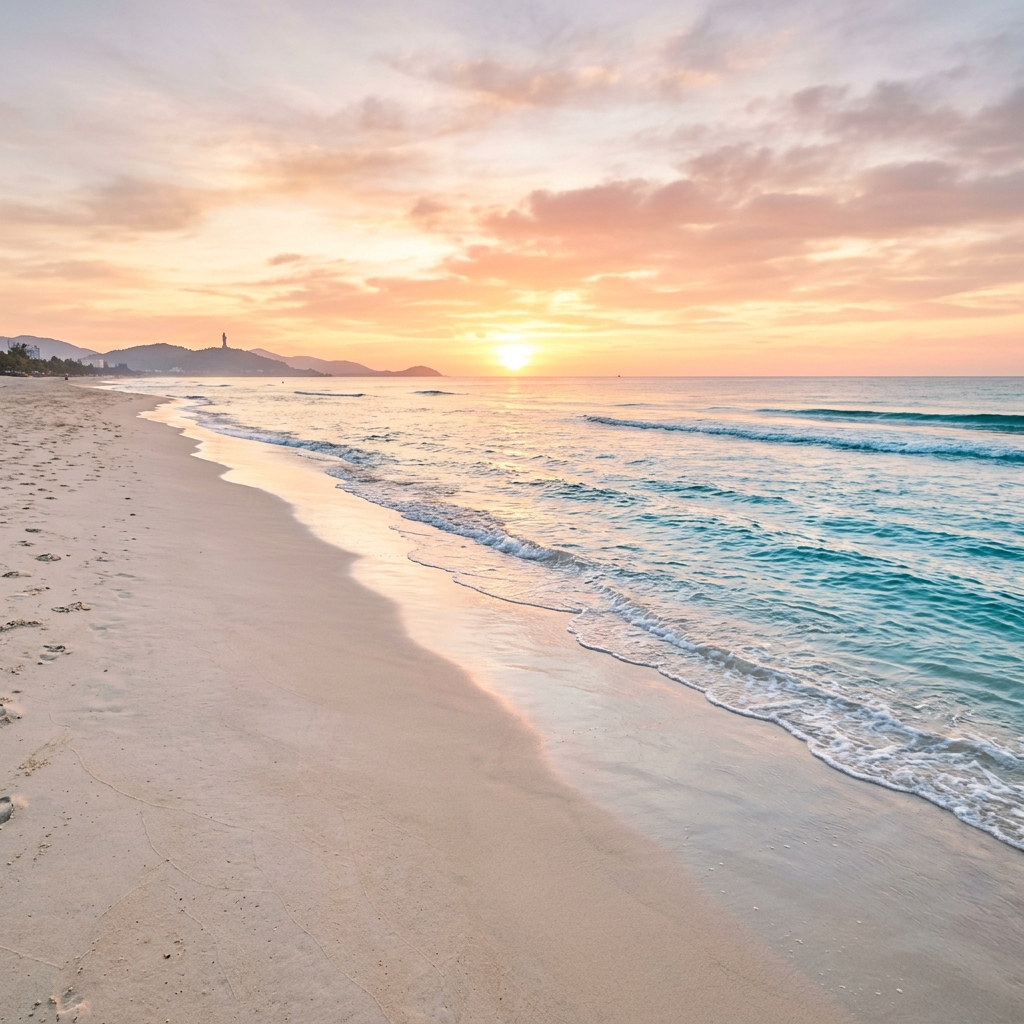
At 6 AM, I stood on My Khe Beach with sand still clinging wet to my flip-flops, watching the sun climb up from the horizon, and only one thought came to me: why didn't I do this sooner?
Hanoi was at 38°C. Saigon was drowning in rain. And me — standing here, sea breeze on my face, no 8 o'clock meeting, no deadline — suddenly the question "where to go in summer 2026" that I'd agonized over for three weeks straight felt utterly ridiculous.
The answer was: right here. Da Nang to Quy Nhon. Ten days. And here's what happened.
Why Choose the Da Nang – Quy Nhon Route for Summer 2026?
Honestly, this decision wasn't as "beautiful" as it sounds. I mostly picked this route because... I had no idea where else to go.
Phu Quoc, I'd done last year — gorgeous but expensive and crowded. Da Lat didn't make sense for summer because it rains most afternoons this time of year. Going abroad, the budget wouldn't allow. I sat with my best friend, the two of us looked at each other and said in unison: fine, central Vietnam it is.
Then I used the ECSATrail AI Planner to sketch out a rough itinerary — I typed in: "10 days, 2 people, budget around 15,000,000 VND per person, love the beach, don't like places that are too crowded." The AI came back with a framework in under a minute: 3 days in Da Nang, 2 days in Hoi An, 5 days in Quy Nhon. A more sensible split than anything I'd come up with after 2 hours of scrolling through blogs.
💡 Tip from someone who's been: The central-Vietnam summer route (June–August) is the most sensible choice for anyone starting from Saigon: a direct flight of under an hour, weather steadier than a rainy-season South, and central-coast waters so blue right now it's hard to believe.
The First Days in Da Nang: Prettier Than I Expected
This was my third time in Da Nang. The first was back in university, on a group tour — I remember nothing but Ba Na Hills. The second was a work trip, running from the conference back to the hotel to sleep. This time — for the first time, I actually stayed in Da Nang.
And it was completely different.
On the first morning, I woke up at 5:30 from fake jet lag (I'd gone to bed too early). I stepped out onto My Khe at 6 AM — and the beach was mine alone. Not in a flowery way. There really were only about a dozen people, mostly locals doing their morning exercise. The sea was a deep blue, the kind not yet "cooked" by harsh sunlight. I sat there for nearly an hour, doing nothing, not checking my phone.
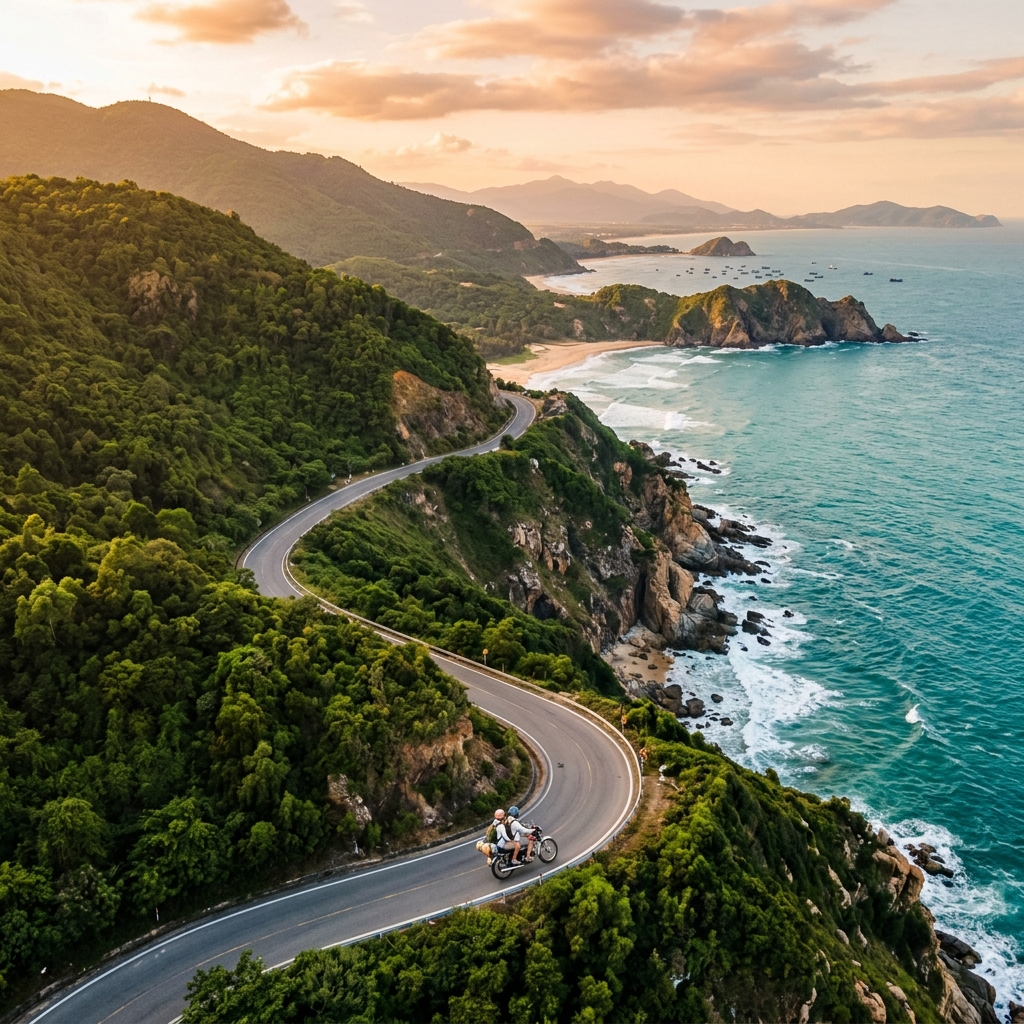
That first afternoon, we rented a motorbike and rode up Son Tra. This is where the funny part happened.
Halfway up the slope, a monkey jumped onto the back seat of my friend's bike and instantly grabbed the plastic bag of banh mi he was holding. My friend shrieked; the monkey looked back calmly, peeled out all the food, then tossed the bag back — spotless, not a grease mark on it. The locals standing nearby saw our faces and burst out laughing. That scene wasn't in a single travel blog I'd read.
In the evening, we went up to Ba Na Hills. Honestly — the cable car is impressive, and the Golden Bridge is beautiful if you can ignore the 200 people lined up for photos. The commercial Village feels more like a middling theme park than a French quarter. I was a little disappointed with that part. But there was one thing I didn't expect: the atmosphere at the top around 7 PM, when the lights came on and the mist began rolling in — from a distance it was strangely, genuinely beautiful, the kind of beauty a camera can't capture.
💡 A practical tip about Da Nang: Go to Ba Na Hills in the evening rather than the morning — fewer people, and the night lighting is far prettier than daytime. And do Son Tra early, before 8 AM, while the roads are still empty and the monkeys haven't "clocked in for the morning shift."
Hoi An: The Old Town I Kept Thinking Would Bore Me
I'd been to Hoi An twice before and, honestly — I came this time almost out of obligation. It would be strange to be in central Vietnam and not stop by Hoi An. I didn't expect much.
Then that old lady appeared.
On my second morning in Hoi An, I was wandering alone down a narrow alley behind Hoi An Market at 7 AM — the hour when the tourist food stalls aren't open yet but the locals have already finished breakfast. There was an old lady, maybe 70, sitting on a low plastic stool beside a basket of banh mi with no sign. Around her, other women were buying too. I stopped, pointed at the basket, and held out 20,000 VND.
She looked at me, looked at the note, then shook her head — and handed back 5,000. That banh mi was only 15,000, filled with homemade cold cuts, the crust crisp in a way you don't find in Saigon anymore. I stood and ate right there, by the alley, listening to the neighborhood women chatting in a local dialect I couldn't follow, and I felt like I was touching the part of Hoi An that isn't in any brochure.
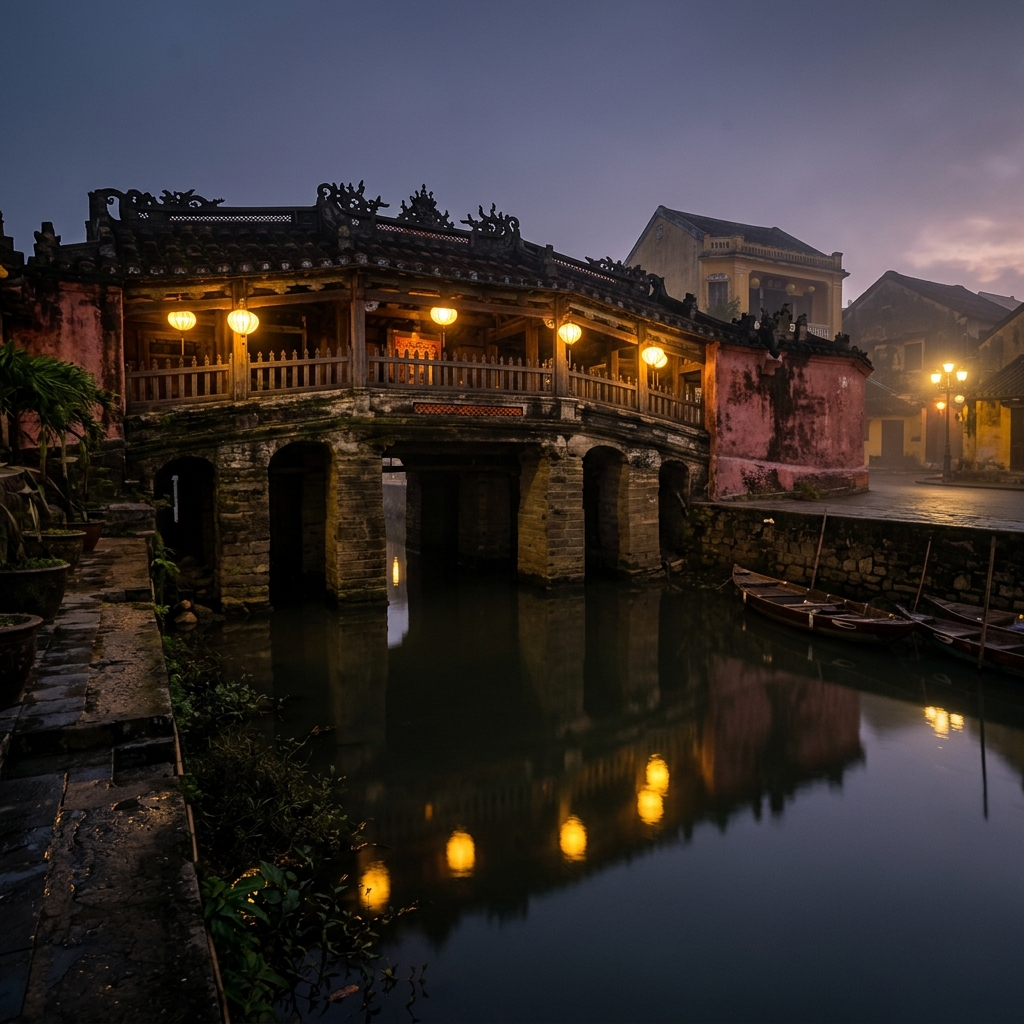
The next morning, I woke up at 4:45 — partly because I wanted to try, partly because of the roosters next to my guesthouse. I got to the Japanese Covered Bridge at 5:15. Completely empty. Not a soul. Yellow lamplight reflecting off the river, no sound but flowing water. I stood there for 20 minutes and understood why people keep coming back to Hoi An no matter how many times they've been — because it changes depending on the hour you're there.
💡 A tip about Hoi An: The old town is beautiful by day, but Hoi An truly belongs to the early morning (before 7 AM) and the late night (after 9 PM). In those windows, there are fewer tourists, the light is beautiful, and you finally sense the soul of the place instead of just the crowds.
🗺️ By the way: I planned this 10-day itinerary with the ECSATrail AI Planner in about 15 minutes. The AI suggested local eateries and optimal visiting hours I couldn't have found on Google myself — give it a try if you're planning your summer 2026 travel.
Quy Nhon: The Biggest Surprise of the Journey
If Da Nang was the part I expected and Hoi An was the part I underrated, then Quy Nhon was the part that completely changed how I think about summer 2026 beach travel.
I arrived in Quy Nhon knowing almost nothing. From the name, I knew it had a beach, banh it la gai cakes, and that it had been getting more attention online lately. That was all. And because I expected nothing, everything became a surprise.
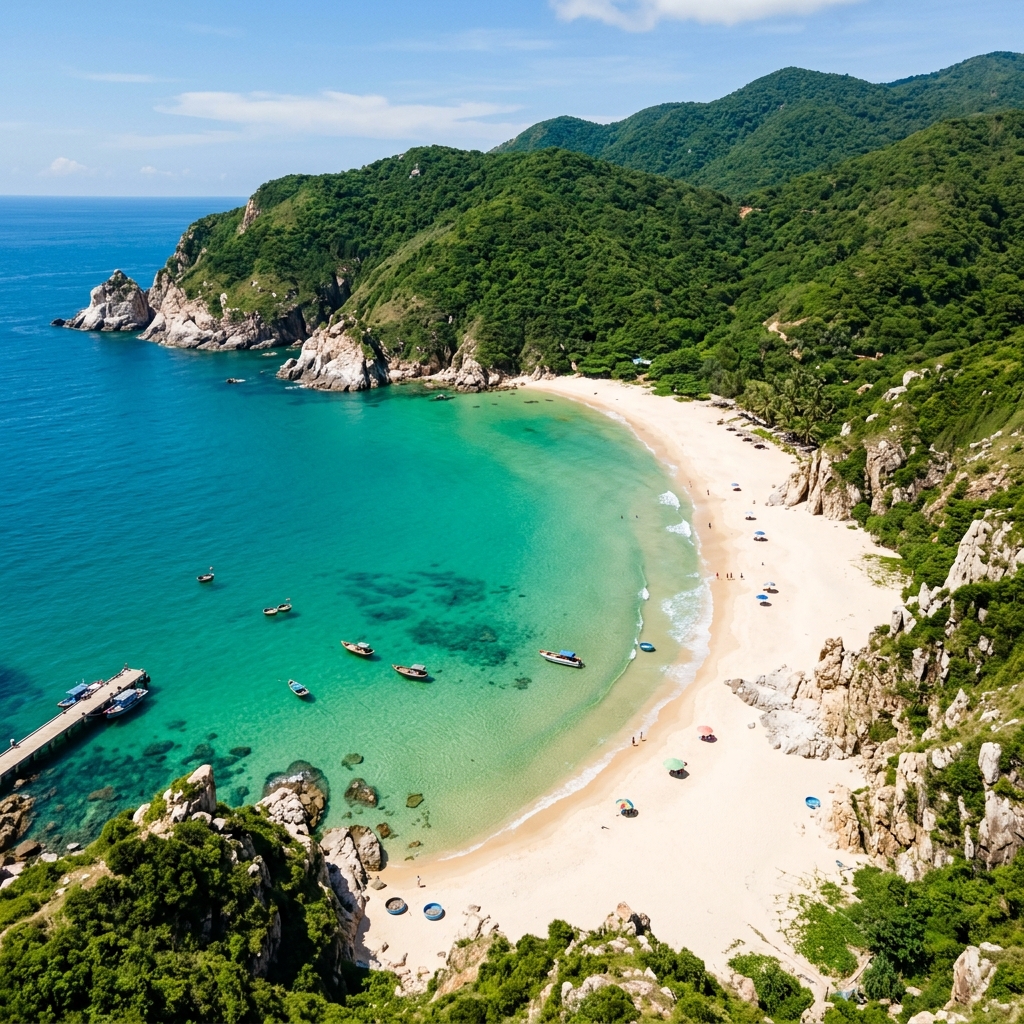
The first time I saw Ky Co Beach — I went silent for about 10 seconds. Not because I was too stunned to speak, but because my brain genuinely needed time to process that the color of that water was real. Turquoise like you only see in color-graded photos, except this time I was standing there looking at it with my own eyes. White sand, water clear enough to see the bottom at 2 meters deep, and so few people I could count the number of heads on the beach.
On my third day in Quy Nhon, we went to Eo Gio. The offline map I'd saved glitched, sending us onto a small, nameless dirt road. Instead of turning back, we just kept heading toward the sea. That road led out to a small patch of land with no name on Google Maps, and right there was a thatched hut with about 4 tables, the owner sorting the shrimp and crab he'd caught that morning.
That seafood meal — freshwater crayfish, blue crabs, sweet snails — came to about 400,000 VND for two. Delicious in a way words can't explain.
Quy Nhon is like Phu Quoc 10 years ago — before it was "discovered" en masse, before five-star resorts sprouted everywhere, before seafood prices tripled. The infrastructure is still developing, the roads to some spots aren't finished, and the service isn't as polished as Da Nang's — but that's exactly why it still holds on to something more real.
💡 A tip about Quy Nhon: Ky Co Beach can only be reached by boat from Quy Nhon port (about 80,000–100,000 VND per person round-trip). Go in the morning — before 10 AM the water is clearest and the crowds thinnest. Don't book a tour — renting your own boat is cheaper and far more flexible.
What I Learned from 10 Days of Summer 2026 Travel
Ten days isn't long. But there are a few things this trip taught me — not travel tips in the usual sense, but a way of seeing.
Don't book your schedule too tight. The best moments of the trip — the old lady selling banh mi, the nameless seafood shack, the morning at the Japanese Bridge at 5 AM — none of them were on the itinerary. They happened because I had time to wander off. Every day should have at least one stretch that's free, with no fixed destination.
Summer in central Vietnam is genuinely hot, but there are two golden windows in return. Morning from 5:30 to 8:30, and evening from 5 to 7:30 — the temperature eases right off, the light is beautiful, and that's when everything becomes memorable. From 10 AM to 4 PM — stay in a café, take a nap, or just head to the beach for a swim.
AI planning saves you research time, but the most memorable moments usually lie outside the itinerary. ECSATrail gave me a good skeleton — knowing where to stay and for how many days, how to get around, which traffic snarls to avoid. The rest is decided by people, not by an algorithm.
Don't skip places that "sound ordinary." Quy Nhon doesn't sound as "hot" as Da Nang or Hoi An. But that's exactly why it was the highlight of the whole trip.
Going with the right person matters more than going to the right place. My friend — the one whose banh mi got robbed by a monkey — turned even the moments we got lost into stories to tell. A solo trip is good too, but the happiest moments usually need someone there to catch your eye and laugh with you.
Still Wondering Where to Go for Summer 2026?
If you're still wondering where to go in summer 2026, my answer is: don't overthink it. Pick a direction, sketch a rough plan, and let the surprises happen.
The Da Nang – Hoi An – Quy Nhon route is a great pick for this summer, especially if you want the beach without the crowds, culture without losing a whole day to travel, and a moderate budget while still having real experiences.
And if you want an itinerary with a good starting point — ECSATrail AI Planner builds you a framework in 30 seconds, for free. Enter your budget, number of days, and preferences — the AI handles the rest. The wandering and getting lost, that part's for you to keep.
Read more: Top 10 Travel Destinations in Vietnam 2026 | How to Plan a Trip with AI | ECSATrail Blog